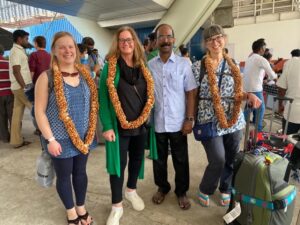
At last … we made it to Chennai! It had been 3 long years. Lockdowns and quarantine rules were the start of the delays, but then the Indian government made it very hard for UK citizens to get visas. But, at last, we were able to get tickets and go and meet our friends. There is nowhere quite like India. We were greeted at the airport with garlands and happy smiles by Kevin and some of the lads. The garlands are wonderful and the smell of sandalwood is strong! After the long journey it was quite emotional to think we were finally here again.
 The noise and smells of India fill your senses as you dodge the motorbikes with what looks like entire families sitting precariously behind (and sometimes in front of !?) the driver. The tuk-tuks beep their horns as if playing in a mass orchestra. Cars and buses fight for the same bit of road… This is India.
The Kooum River Slum
After a brief rest, we make our way to the slum. The “Sovereign King Mission” building was previously hidden from the river by a row of shop units and housing. But there has been an effort by the local government to open up the riverside and that whole row of old buildings have been demolished. Now the front of the church building can be seen across the river. It is about 4 stories high, and well lit at night. It has become an important place of refuge for the community, particularly during monsoon season when the whole area often floods and everyone living at street level needs a building with a first floor to escape to in order to stay dry.
 The ground floor area of the church building is like a big garage (brightly lit with concrete floor and walls – flood proof and easy to clean!). This is normally where the 300+ sponsored children come 6 days a week for the after-school club and feeding programme. The next level is a large auditorium (which also has a balcony) which is used for worship services. The floor is carpeted (as most of the people sit on the floor) and it feels clean. This is also where we conduct the interviews and take the photographs of the sponsored children. Above that are flats. One of these is Kevin and Deborah’s home. They are trying to rent out the other flats to provide income for the church and the work they do serving the poor.
The rest of the slum still looks (and smells) similar to when we first visited – a variety of little shops and workshops squeezed in amongst the different kinds of housing. Clearly overcrowded. Little shacks line some of the roads with makeshift roofs and blankets for doors. These “houses” are tiny inside and yet they are home for a family. They are not even big enough for everyone to sleep at the same time. Then there are old blocks of flats with no sanitation. These stand tall, several stories high, and the stairwells are dirty, with broken steps and wiring hanging off the walls.
The fish market is a feature in the middle of the slum. Many of the people work there, but few would say it is a happy place. The smell of rotting fish attacks your nose.
 Some of the communal toilets down are at the end of the street. They amount to a set of 10 stalls with holes that empty straight into the river below. There are other toilets, but from the smell and the fact there is nobody queueing to use them, they are clearly blocked again.
But then, standing out among the muddle, are some new apartment blocks. The government are slowly replacing the run-down old houses (many of which had asbestos roofs) with slightly larger homes with better sanitation. This is both good and bad news. Each block that is replaced means the inhabitants are forced into the local government rehousing programme. The process requires these people to live in a different region, often 2 or more hours away, for about two years. They are promised they can return once the new housing is built. As a result the historical community connections get broken and many say they feel displaced and lonely. When this happens to a family Grassroots is supporting it is not always possible to continue sponsoring the children as they are living too far away and cannot make it to the after-school club. It is also unknown whether they really will return, as it is often easier to make a new life where they have been moved.
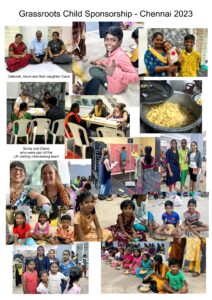
Some things don’t change. The children and young people continue to come to the after-school club in ever increasing numbers. Each day a team from the church prepare the evening meal in large vats, and then serve dollops on to stainless steel plates ready for the children to eat. This time the smell is amazing. The children arrive after school. They chatter with each other amidst completing their homework – often with help from the older ones. They are so excited to see us. Visitors!! The noise level is so high that my watch alarmed, telling me that my ears were in danger of being damaged!
 After everyone has had a good meal (and had many “second” helpings) the children begin to wind their way home. The older ones start clearing up and then accompany the little ones, making sure they get to their mothers. Lots of chatter and laughter continues until there are just a few adults. Yes, this club provides a place for them to get help with their homework. Yes, this place provides nutrition for their bodies. Yes, they have fun. But it is far more than that. It is a place of kindness, of community, and of safety! The streets and homes surrounding this place are dangerous. The damaging effects of alcohol addiction are endemic in this area. Adults who have had their dignity removed by awful work (often in the fish factory) drown their sorrows as soon as they can, spending the meagre wages on hooch. Drunk people are not safe around children. If the children go straight home after school they are often beaten or see violence happening to their mothers. The club provides a temporary safe place, allowing the alcohol to have time to leave the drinker asleep and safe for the children to return home.
The church continues to pray for their community. One by one people have been set free from this cycle of hopelessness, addiction and violence. They have seen some amazing life transformations as God sets the oppressed free. This is not a place of judgment, but love.
The Sponsored Children
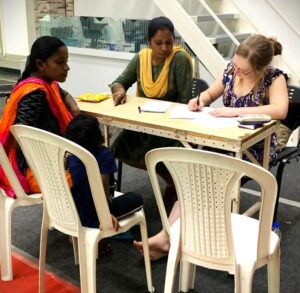 Each child, along with their parent or guardian, has an “interview” during the UK team’s annual visit. The interviews take place in the church. Rows of colourful, elegant women sit cross legged on the floor with their children waiting for their turn. The variety of Saris is magnificent. The children are very smiley and keen to share a little about their lives. Some we have known for many years and it is wonderful to meet up again and a relief to know that they are well. Below is a photosheet with a couple of pictures while the interviews were conducted when we visited in January. The families are keen to know how their sponsor is. They tell us “we pray for them” and “we love them”. It is lovely to hear how much they appreciate the support. Almost everyone in the slum would be considered by the Hindu caste system to be DALIT. This is the largest group understood to be outside the caste system. The British, during the time of the empire, called them the “untouchables”, because those who were in the higher castes refused to touch DALIT people. They are still considered low and unclean. This is one of the main motivations for becoming Christians, because God the Father says they are his dearly loved children and receives them with open arms. At the end of almost all Christian meetings there are times of prayer were everybody has hands laid on them as they are prayed for. No longer untouchable!
Your sponsorship does more than you know. It doesn’t just provide school uniform, lunch boxes, shoes, daily food and the homework club. It also provides dignity and a sense of being known and prayed for by someone. Each of these children and families know they are not forgotten and they are not worthless. They matter enough to someone a long way away to even give them money! This helps break the feeling of being “untouchable” in a very practical and tangible way. Thank you!
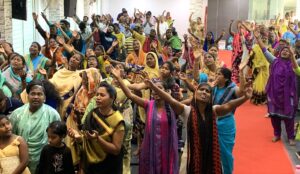
Kevin and Deborah continue to lead Sovereign King Mission – the church that hosts and organises delivery of the child sponsorship programme. It is a vibrant church with crowds joining in the worship meetings. A great group of volunteers from the church help with the child sponsorship programme. Many of them are the older children on the scheme who help with the younger ones. The key to everything is a group of mothers and others who cook the meals that are provided each day. This is the community serving the community. It is beautiful. Grassroots believes that we should only partner with indigenous led projects and churches. Kevin, Deborah and the team know how to serve the people who live across the street from them. They just need the resources and encouragement!